
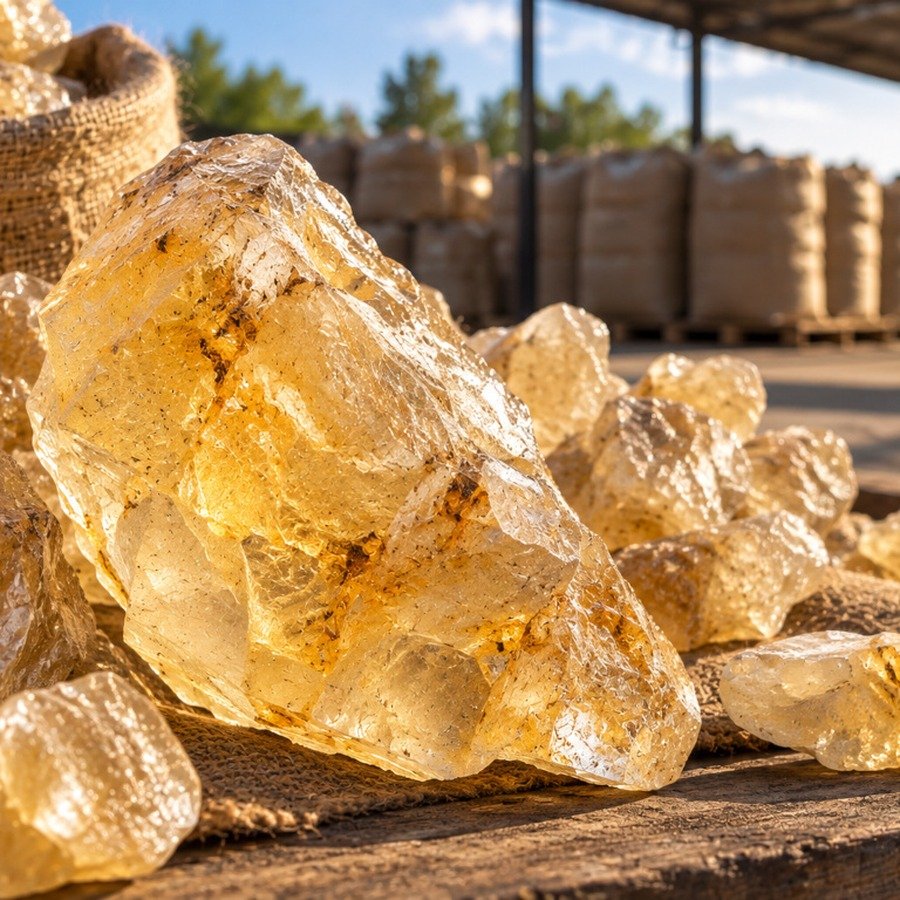
Damar batu in lumps, sorted on colour and clear stone.
Semi-fossil dammar collected from Shorea stands and hand-sorted into colour grades. Bought by varnish, printing-ink and adhesive makers, and by incense producers who need a fixed colour from shipment to shipment.
What we sell against
How the lots are separated
Grade A
Pale, high share of clear stone, large lumps. The grade fragrance and fine-varnish buyers ask for.
Grade B
Mixed colour with some cloud. The working grade for industrial varnish and ink.
Grade C
Dark and mixed lump size, for incense blending and filler use.
Powder
Milled to the buyer’s mesh. [TBC]
Who buys it, and for what
Getting it into a container
Figures marked [TBC] are drafted proposals awaiting confirmation from the trading desk.
Damar batu — questions buyers ask
Answers from the trading desk. If yours is not here, put it in the enquiry and it will be answered in the reply.
Against retained reference lumps held at the Bangkok yard, not by eye alone. That is why grade A means the same thing in March as in October. We send the reference photograph with the offer so you can check our grade against your own standard before committing.
Yes, milled to your mesh specification. Powder oxidises faster than lump, so we mill against a confirmed shipment rather than to stock. Finer cuts carry a milling charge and add to the lead time. Tell us the mesh and the volume and we will confirm what the mill can hold.
Reported per lot on the certificate of analysis. Semi-fossil material sits higher than fresh dammar, which matters if you are blending to a fixed softening point. If your formulation depends on it, specify the range in the contract rather than assuming a typical figure.
Yes. Third-party inspection by SGS or an equivalent agency can be arranged before loading, at the buyer’s cost. We give the inspector access to the lot in the yard rather than to a reference stock, so what is sampled is what loads.
Invoice, packing list, bill of lading, certificate of origin, phytosanitary certificate and fumigation certificate, with a certificate of analysis on request. Tell us at the quotation stage if your customs authority needs anything beyond that set, since some destinations ask for additional health documentation.
Tell us the resin content and the port.
We reply with an indicative price, a packing plan and container fill, and what we can send as a sample.