
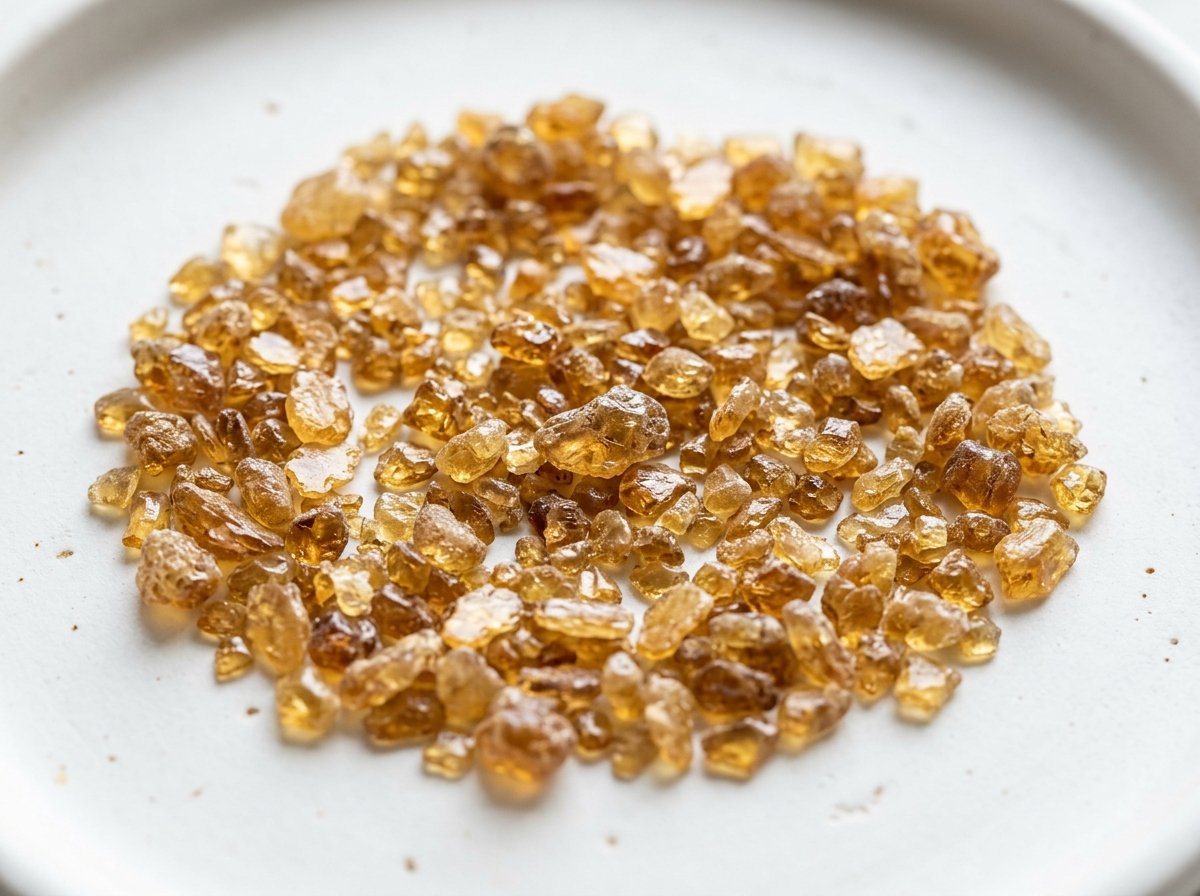
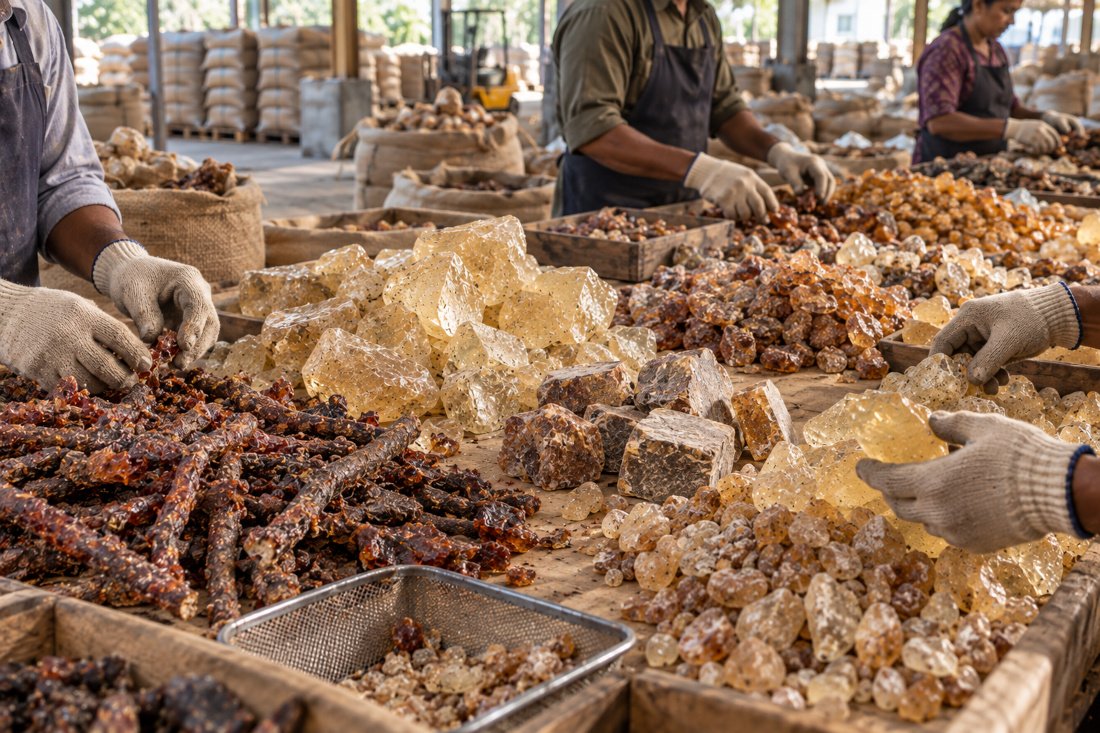
Washed, crushed and de-dyed raw lac, ready for shellac refining.
Granular lac resin obtained by crushing sticklac and washing it thoroughly in water to remove natural lac dye, insect remnants and woody debris. Seedlac is the critical intermediate raw material for bleached dewaxed shellac, button lac, pharmaceutical coatings and confectionery glazes.
What we sell against
How seedlac lots are evaluated
Golden Kusmi Seedlac
Derived from Schleichera oleosa host trees. Light golden colour, highest resin yield, lowest dye retention, and lowest hot alcohol insolubles (under 3%). Premium grade for bleached shellac and pharma glazes.
Lemon / Baisakhi Seedlac
Derived from Butea monosperma and Ficus hosts. Rich amber to golden-brown granular flakes, typically 3% to 5% insolubles. Standard volume grade for industrial lacquers, adhesives and technical shellac.
Fine Mesh Cleaned
Double-washed and sieved seedlac with insect debris and fine dust removed, screened to 10–20 mesh. Shipped for high-purity extraction and alcoholic varnishes.
Who refines seedlac, and for what
Getting seedlac into a container
Seedlac softens and blocks if exposed to ambient heat and humidity. All container stowage is moisture-controlled.
Seedlac — questions buyers ask
Answers from the trading desk. If yours is not here, put it in the enquiry and it will be answered in the reply.
Sticklac is the raw, unrefined encrustation directly harvested from tree twigs, containing up to 30-40% woody bark, lac dye and insect matter. Seedlac is sticklac that has been crushed, sieved and repeatedly washed in water to remove water-soluble lac dye and dirt, yielding clean resin granules containing 85-90% pure resin.
Seedlac is primarily priced based on its hot alcohol insoluble percentage (typically 3% max for Kusmi and 5% max for Baisakhi). We guarantee maximum insoluble thresholds in the contract and certify each batch against laboratory test reports drawn from retained reference samples.
Yes, natural lac has a softening point around 65-70°C, and high moisture can cause granules to aggregate into lumps (blocking). To prevent this, our export lots are dried below 2% moisture prior to packing, packed in moisture-barrier lined bags, and containerized with industrial desiccant poles.
Standard commercial trial lots start at 1 pallet (1 MT), with contract container business moving at 18 to 20 MT per 20ft FCL. Samples are available by courier for laboratory testing prior to contract confirmation.
Export corridors & destination customs documentation
Shipped directly from Bangkok Port (PAT) and Laem Chabang Deep Sea Port. Every export container of seedlac (HS Code 1301.90) is supported by authenticated origin documentation, laboratory analysis, and phytosanitary clearance tailored to destination port regulations.
India & Subcontinent — Nhava Sheva & Kandla
ASEAN-India FTA preferential duty tariffs backed by Department of Foreign Trade (DFT) Form AI Certificate of Origin, Phytosanitary, and PQ clearance certificates.
Middle East & GCC — Jebel Ali & Dammam
Full Chamber of Commerce legalisation, attested commercial invoices, non-GMO health declarations, and Halal-conforming packaging where requested.
East Asia & ASEAN — Hai Phong & Cat Lai
Form D (ASEAN) and Form E (ACFTA) duty concessions, standard SGS pre-shipment quality inspection, and express direct carrier bill of ladings.
Europe & Americas — Rotterdam & Hamburg
Strict EU phytosanitary passporting, ISPM-15 heat-treated fumigated pallets, full chemical COA (Certificate of Analysis), and CITES export permits where applicable.
Also in the programme
 HS 1301.90
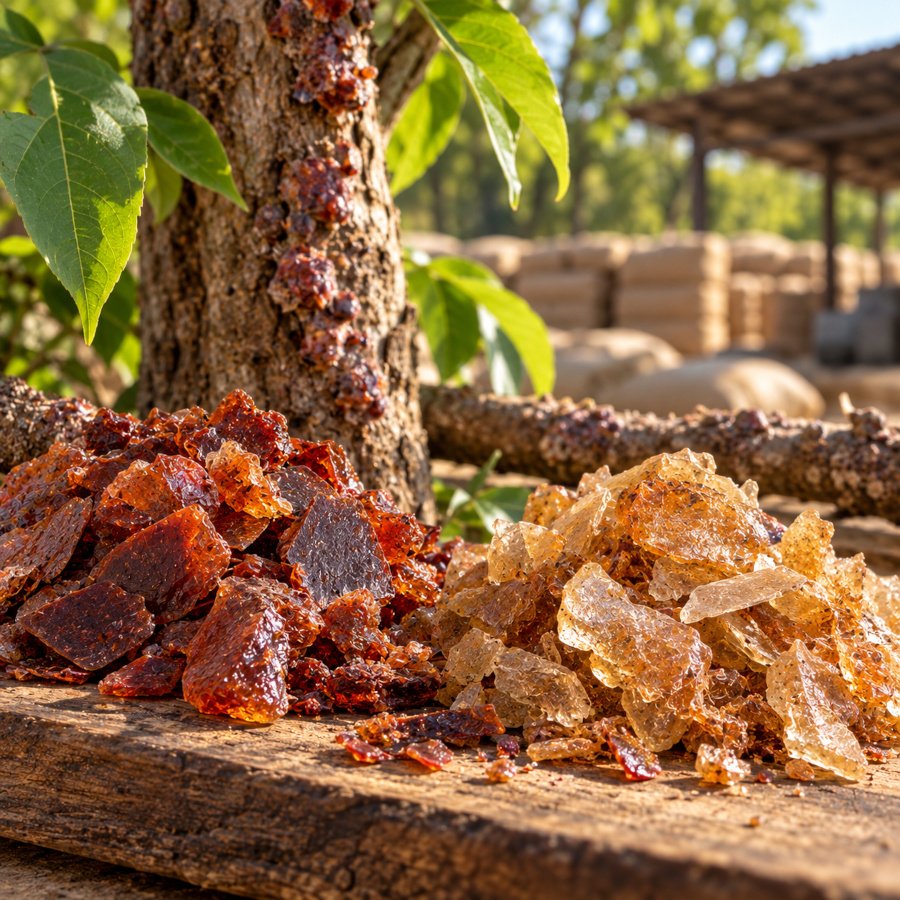
Sticklac
 HS 1301.90
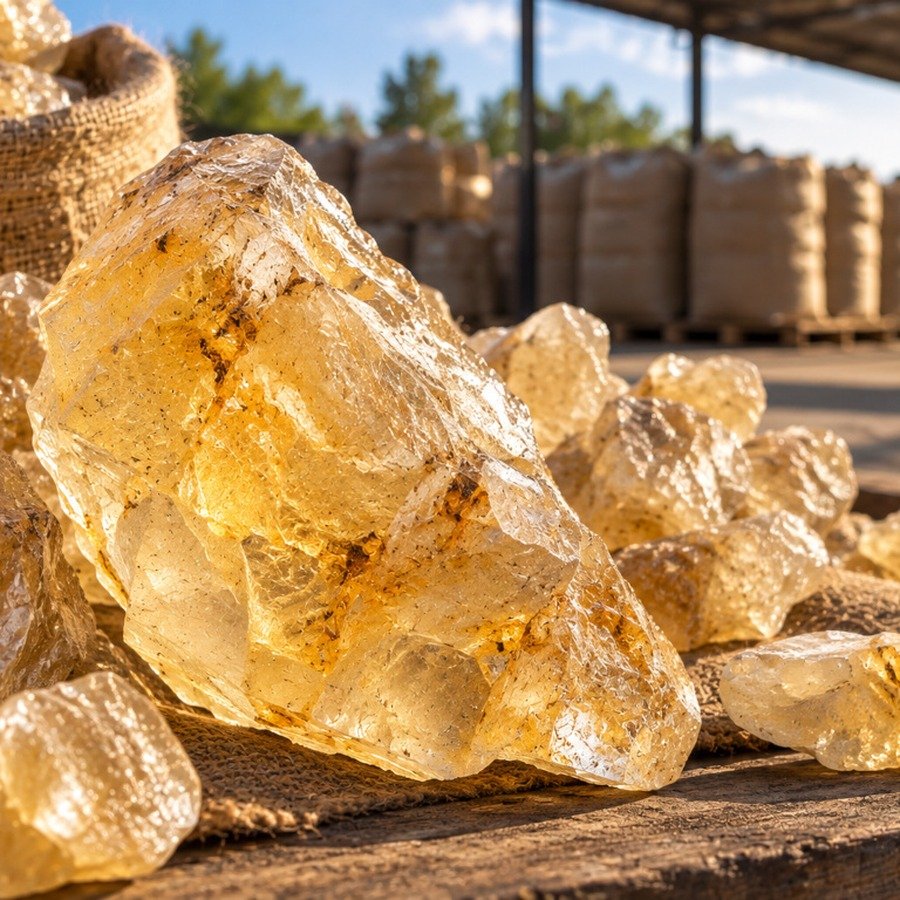
Damar batu
 HS 1301.90
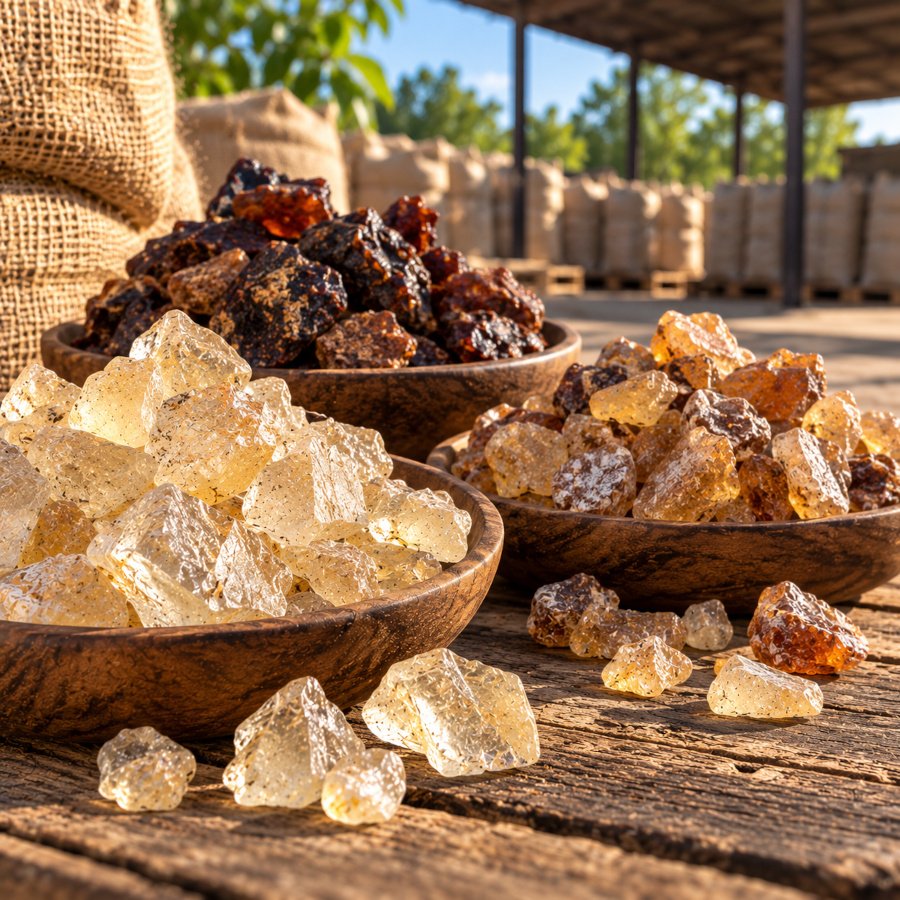
Gum copal
 21 Lines
All 21 Export Commodities
Natural gums, resins, tropical hardwood, pulses, beans, rice & fresh Thai produce.
Tell us the resin content and the port.
We reply with an indicative price, a packing plan and container fill, and what we can send as a sample.